

A Landmark Change in Women’s Health
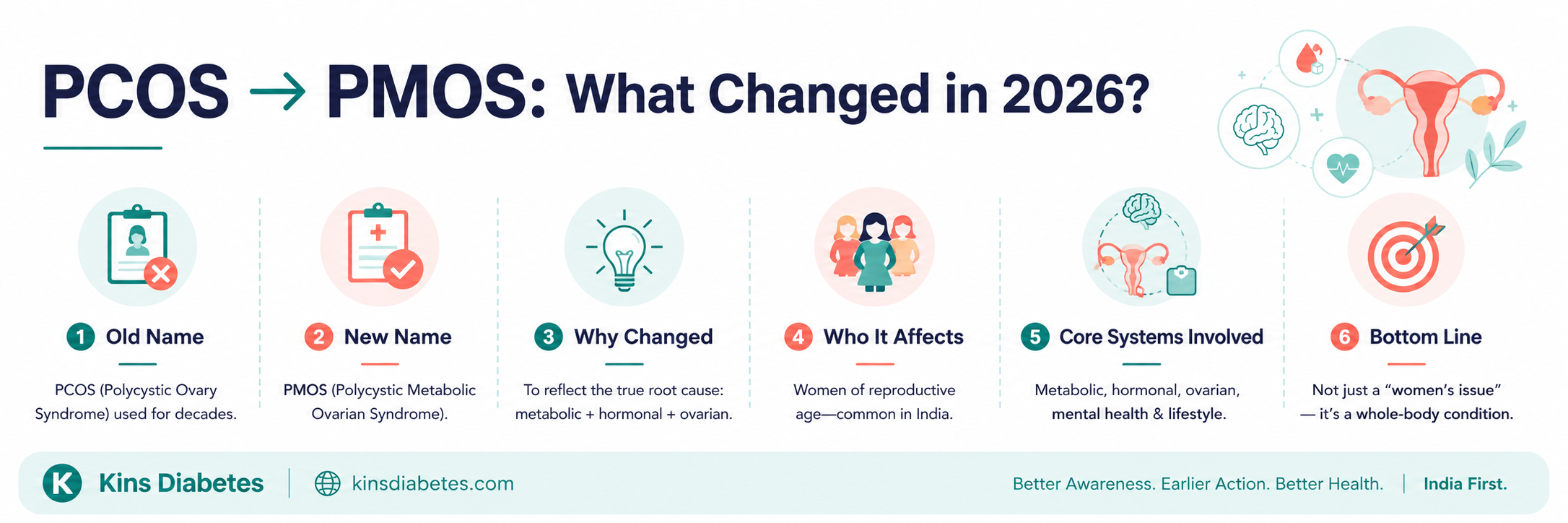
In May 2026, a major shift occurred in the field of endocrinology and women’s health. The condition long known as Polycystic Ovary Syndrome (PCOS) was officially renamed Polyendocrine Metabolic Ovarian Syndrome (PMOS) following an international consensus process published in The Lancet. This change reflects decades of research demonstrating that the disorder is far more complex than a disease of the ovaries alone.
The new terminology aims to improve awareness, reduce misconceptions, and better represent the true nature of this common condition affecting millions of women worldwide. On this International Women’s Health Day, let’s speak about what’s really going on inside your body – and what you need to know.
What is PMOS?
Polyendocrine Metabolic Ovarian Syndrome (PMOS) is a chronic hormonal and metabolic disorder that affects multiple body systems.
The name itself explains the condition:
- Polyendocrine – involves several hormonal pathways and endocrine organs
- Metabolic – closely associated with insulin resistance and metabolic dysfunction
- Ovarian – affects ovulation, fertility, and ovarian function
- Syndrome – represents a group of interconnected clinical features
Rather than being simply an ovarian disorder, PMOS is now recognized as a complex multisystem condition involving reproductive, metabolic, endocrine, dermatological, and psychological health.
Why Was the Name Changed?
For many years, patients and healthcare professionals expressed concerns that the term “PCOS” was misleading.
The older name suggested that:
- Ovarian cysts are always present
- The condition is primarily a gynecological problem
- Fertility issues are the only major concern
However, research has shown that:
- Many affected women do not have ovarian cysts
- The “cysts” seen on ultrasound are actually immature follicles rather than true pathological cysts
- Metabolic abnormalities and hormonal disturbances are central features of the disorder
- The condition affects health far beyond the reproductive system
Experts therefore concluded that the term PMOS more accurately captures the endocrine and metabolic nature of the disease.
Common Features of PMOS
PMOS can present differently in different individuals, but common manifestations include:
Reproductive Features
- Irregular menstrual cycles
- Absent or infrequent ovulation
- Difficulty conceiving
- Infertility
Hyperandrogenic Features
- Excess facial or body hair (hirsutism)
- Acne
- Oily skin
- Scalp hair thinning or alopecia
Metabolic Features
- Insulin resistance
- Weight gain
- Central obesity
- Difficulty losing weight
Ovarian Features
- Polycystic ovarian morphology on ultrasound
- Enlarged ovaries with multiple small follicles
The Metabolic Side of PMOS
One of the most important reasons behind the new nomenclature is the growing recognition that PMOS is strongly linked with metabolic dysfunction.
Women with PMOS are at increased risk of:
- Type 2 diabetes mellitus
- Prediabetes
- Dyslipidemia
- Hypertension
- Metabolic syndrome
- Fatty liver disease
- Cardiovascular disease
- Obstructive sleep apnea
Importantly, these risks may occur even in women who are not overweight, highlighting the need for comprehensive metabolic evaluation and long-term follow-up.
Beyond Physical Health
PMOS can also have significant psychological and emotional impacts.
Many women experience:
- Anxiety
- Depression
- Reduced self-esteem
- Body image concerns
- Stress related to infertility and chronic symptoms
Recognizing PMOS as a multisystem disorder encourages a more holistic approach to patient care.
Has Anything Changed About Diagnosis?
At present, the diagnostic principles remain largely unchanged.
Healthcare professionals continue to assess for:
- Menstrual irregularity or ovulatory dysfunction
- Clinical or biochemical hyperandrogenism
- Polycystic ovarian morphology on ultrasound
The name has changed, but the goal remains the same: early diagnosis and individualized treatment.
Management of PMOS
Treatment is tailored to the patient’s symptoms and goals.
Lifestyle Modification
- Regular physical activity
- Balanced nutrition
- Weight management
- Adequate sleep
- Stress reduction
Medical Therapy
- Combined oral contraceptive pills for cycle regulation
- Insulin-sensitizing agents such as metformin
- Anti-androgen therapy for hirsutism and acne
- Fertility treatments when pregnancy is desired
Long-Term Monitoring
- Blood glucose screening
- Lipid profile assessment
- Blood pressure monitoring
- Cardiovascular risk evaluation
What Does This Mean for Patients?
The transition from PCOS to PMOS is much more than a change in terminology.
It represents a shift toward:
- Better understanding of the condition
- Earlier diagnosis
- Improved multidisciplinary care
- Greater emphasis on metabolic health
- Reduced stigma and misconceptions
By recognizing PMOS as a complex endocrine-metabolic disorder rather than simply an ovarian condition, healthcare systems can provide more comprehensive and patient-centered care.
Take-Home Message
Polyendocrine Metabolic Ovarian Syndrome (PMOS) is the new name for the condition previously known as PCOS. The updated terminology acknowledges that the disorder extends far beyond the ovaries and involves multiple hormonal and metabolic pathways.
This Women's Health Day, the most powerful thing you can do for your future health is one simple conversation with your doctor — about your PMOS.
At Kins Diabetes, we work with women navigating exactly this intersection of PMOS and metabolic health. If you have any questions about your risk, a consultation is the best place to begin.
Know Your Risk. Take Care of Yourself.
Frequently Asked Questions
Read More Articles

Posted on 15-09-2026
Does a Full Body Checkup Include Diabetes? The Complete Test List

Posted on 26-08-2026
Diabetes Diet Chart: What to Eat and What Not to Eat in Diabetes

Posted on 13-08-2026
Best Diabetologist in Siliguri: How to Choose the Right Diabetes Doctor

Posted on 07-08-2026
ডায়াবেটিসে কী খাবেন, কী খাবেন না? সম্পূর্ণ বাংলা ডায়েট চার্ট

