

Diabetes Diet Chart: What to Eat and What Not to Eat in Diabetes
Diabetes doesn't mean you have to say goodbye to good food. However, there is a lot of curiosity among people about the safety of everyday north bengal foods like rice, puffed rice, flattened rice or sweetened curd for diabetic people and how these can be consumed maintaining the blood sugar levels under control.
Here we are presenting a simple and complete diet chart for Nepali or Bengali eating habits, foods that are commonly eaten in North Bengal.
This chart is meant as a general guide only. Everyone’s body, age, medications and health conditions are different. Always consult a qualified doctor or dietitian for a personalized diet plan.
Read this blog in bengali also.
Importance of Diabetes Diet Chart
In diabetes, diet, along with medication, plays a major role in keeping blood sugar levels under control. Eating a balanced and appropriate diet can help to:
- Control sugar spikes
- Encourage healthy weight management
- Reduce your risk of developing heart disease and kidney complications
- May improve overall blood sugar control which may result in a reduction in medication requirements over time in some cases.
However, a healthy diet should not replace medical advice or prescribed treatment – it is simply an important part of a diabetes management plan.
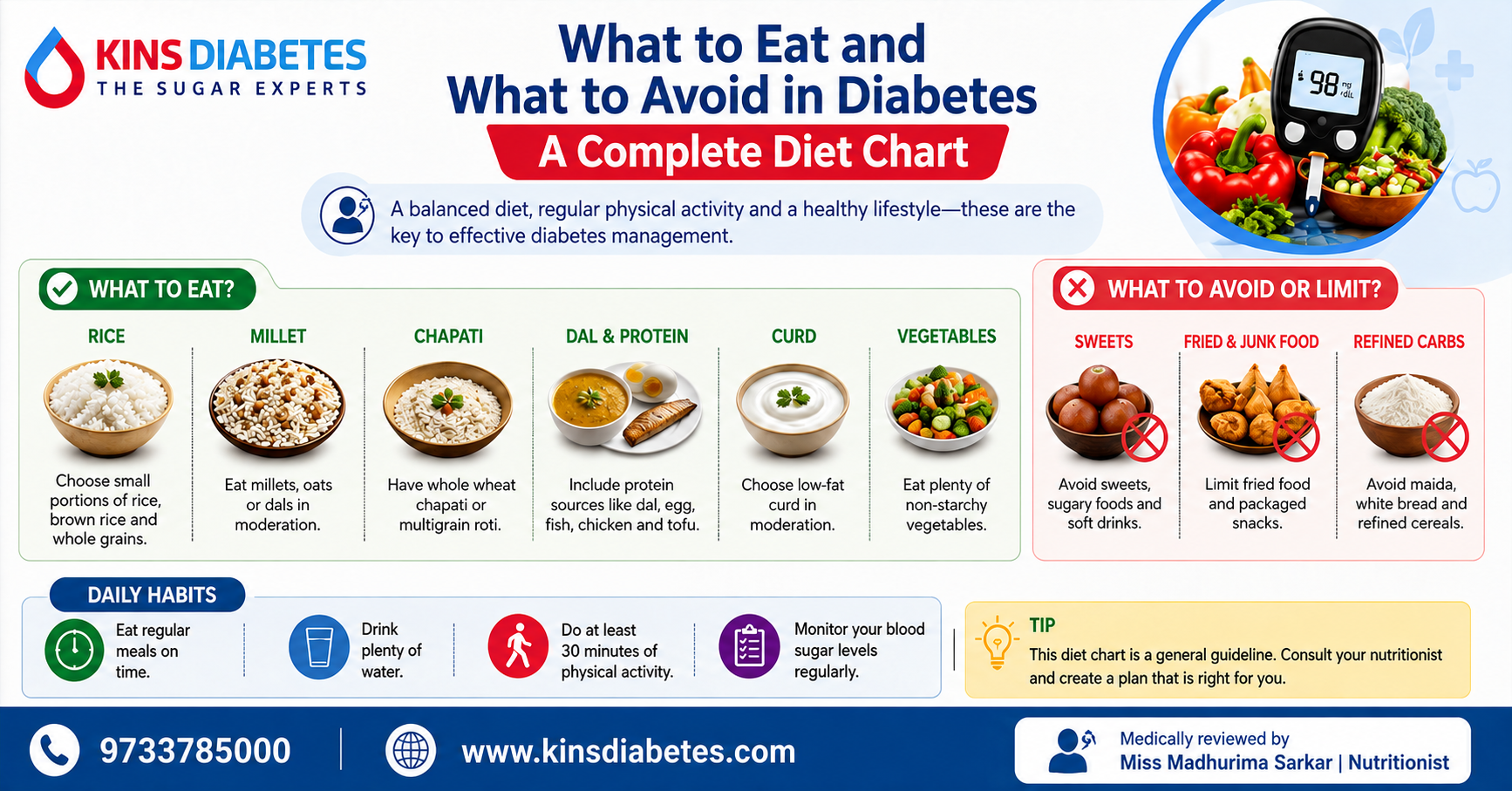
Are Rice and Rice-Based Foods Safe for People with Diabetes?
It is impossible for Nepalis or Bengalis to imagine a meal without rice. White rice has a relatively high glycemic index (a measure of how quickly a food can raise blood sugar levels) so if you have diabetes, it’s worth following a few guidelines:
- Limit rice to around 1 cup per meal.
- Whenever possible, choose brown or red rice.
- Eat rice with lots of vegetables, lentils and protein like fish, eggs or chicken. This may help slow the rise in blood sugar.
- Taking a walk after a meal can also help control blood sugar.
Rice doesn’t need to be eliminated altogether. The key is moderate portions and the right mix of foods.
Light Foods, such as Puffed Rice, Flattened Rice
In North Bengal, puffed rice and flattened rice are commonly eaten for breakfast and as light meals in many homes. There are a few important precautions, however:
- Rather than eating puffed rice alone, try combining it with vegetables, chickpeas or nuts to make a more balanced meal, and to help offset the impact on blood sugar.
- Preferably with plain, unsweetened yogurt as a relatively better option, eat flattened rice in a small portion.
- Prepare or fry puffed rice or flattened rice dishes with a minimum amount of oil.
- Puffed rice or flattened rice can be a light alternative to a heavy dinner but portion control is the key.
Sweetened Curd and Dairy Products – How to Consume in Moderation
Sweetened yogurt is a favorite food in Nepal and Bengal, but the sugar added to it can be a problem for diabetics. Here are some easy substitutes:
- Opt for unsweetened, plain yogurt rather than sweetened yogurt as it offers the benefits of natural probiotics.
- If you are having a small serving of sweetened yogurt to celebrate a special occasion, try to eat less sugar and other carbohydrate-rich foods in the rest of the day’s meals.
- In general, it’s better to opt for lower-fat or lower-fat milk.
- Don’t eat the sweetened or flavored packaged yogurts, as they may contain high levels of added sugar.
Durga Puja and Festival Sweets – How to Enjoy Them Responsibly?
It can be hard to avoid sweets altogether during the festive season – and you don’t have to. With a few simple strategies, you can enjoy the festivities, but keep your blood sugar under control:
- Instead of eating many sweets during the day, have one small sweet.
- If you eat sweets, cut back a little on the amount of rice or other carbohydrate-rich foods in your other meals.
- Do not eat sweets on an empty stomach. Take a little after your main meal instead.
- Sandesh or sweetened chhena (cottage cheese) with less sugar added might be a little better options.
- Do not cut down on your normal exercise and walking even during the Puja days.
We are putting together a detailed guide on how to control diabetes during Durga Puja. Stay tuned for updates.
Glycemic Index (GI) and Safe Portions - A Short Guide
The Glycemic Index ( GI ) is a measure of how quickly a food will raise blood sugar levels. The lower the GI, the slower the rise in blood sugar tends to be.
The following table is a general guide as the actual effect can vary person to person.
| Food | GI (Approx.) | Safe Quantity | Recommendation |
|---|---|---|---|
| White Rice | 70–75 (High) | 1 cup (cooked) | Eat with vegetables and protein |
| Brown/Red Rice | 50–55 (Moderate) | 1–1.5 cups | A good alternative to white rice |
| Puffed Rice (Muri) | 70–80 (High) | 1 small bowl | Do not eat alone; have it with vegetables/chickpeas |
| Flattened Rice (Chira/Poha), soaked | 60–65 (Moderate–High) | 1 handful | Relatively better when eaten with plain curd |
| Sweetened Curd | 35–50* (Depends on sugar content) | 2–3 tablespoons (occasionally) | Avoid regularly; choose plain curd instead |
| Whole Wheat Roti | 45–50 (Moderate) | 2 medium | A relatively safer alternative to rice |
Note: *GI values differ slightly between studies, and may depend on the cooking method. This is a list to provide a general overview and should be checked against reliable clinical sources before publication.
Nutritionist Ms. Madhurima Sarkar's advice: In most of the patients that we see at our clinic, rice-based carbohydrates form a major part of lunch and dinner.
Reducing the size of one of these meals can have a significant impact on overall blood sugar control.
Weekly Diet Chart Summary (Breakfast–Lunch–Dinner)
| Meal Time | Option 1 | Option 2 | Option 3 |
|---|---|---|---|
| Breakfast | 2 rotis + vegetables + boiled egg | Small portion of puffed rice (muri) + chickpea ghugni | Oats + low-fat milk |
| Lunch | 1 cup rice + dal (1 cup) + vegetables (2 bowls) + fish + plain curd | 3 rotis + vegetables (2 bowls) + dal (1 cup) + fish (50 g) / chicken (3 pieces) | 1 cup rice + dal + vegetables + fish + paneer curry / soybean curry (1 cup) |
| Evening Snack | Makhana + tea (without sugar) | Cucumber/carrot + chickpeas | Muri makha (puffed rice mixed with vegetables) |
| Dinner | 2 rotis + vegetables + dal | 1 cup rice (small portion) + dal + vegetables | Roti + vegetables + 1 cup milk |
Foods to Avoid
To summarize, avoid sugary drinks, avoid fried foods, avoid packaged snacks, avoid foods made with refined flour (maida), avoid too many refined carbohydrates.
- Tea or coffee with added sugar, Soft drinks
- Fried foods and food with high oil and spices content
- Packaged foods and processed snacks
- Excessive amounts of white rice, refined flour (maida) or refined carbs
- Sweet bakery and high sugar
How Kins Diabetes Can Help
At Kins Diabetes we provide NABH and NABL accredited services. We prepare personalized diet plans for each patient depending on their age, medicines and overall health condition. You will know exactly which foods are most suitable for your individual needs by speaking directly with our specialist doctors and dietitians.

This article has been medically reviewed by Ms. Madhurima Sarkar, Nutritionist, KINS Diabetes (NABH/NABL accredited) This is for educational purposes only and is not intended to replace professional medical advice.
References:
Sources for the GI/portion claims in the blog
Rice:
- Prasad et al., Food Chemistry 2018, ICMR-National Institute of Nutrition — GI of popular Indian rice varieties: https://pubmed.ncbi.nlm.nih.gov/28867097/
- Traditional Indian carbohydrate foods GI study, PubMed: https://pubmed.ncbi.nlm.nih.gov/2273190/
- Indian Journal of Medical Research — carbohydrate profiling & glycaemic indices of traditional Indian foods (cites ICMR-NIN food composition tables): https://ijmr.org.in/carbohydrate-profiling-glycaemic-indices-of-selected-traditional-indian-foods/
Muri/Puffed rice:
- GI reported in the 70–80 range across multiple diabetes-nutrition sources: https://makesyoueat.com/is-poha-good-for-diabetes/ and https://tap.health/muri-glycemic-index-is-puffed-rice-good-for-diabetics/
Chira/Poha:
- GI range is genuinely wide across studies (38–86 depending on prep) — best single academic reference: https://www.vasudhafoods.in/blogs/resources/poha-glycemic-index-is-flattened-rice-safe-for-diabetics
- Chennai-based clinical GI study (Madras Diabetes Research Foundation) on rice-flake upma: https://www.researchgate.net/publication/359737051_Nutritional_and_glycemic_properties_of_brown_and_white_rice_flakes_upma
Diabetes prevalence context (for intro, per the brief's plan):
- ICMR-INDIAB national study, Lancet Diabetes & Endocrinology 2023 (the actual peer-reviewed source, not just a mention): https://www.thelancet.com/journals/landia/article/PIIS2213-8587(23)00119-5/fulltext
- Original ICMR-INDIAB 15-state prevalence paper, Lancet Diabetes & Endocrinology 2017: https://www.thelancet.com/journals/landia/article/PIIS2213-8587(17)30174-2/abstract
- WHO official Diabetes Fact Sheet (verified current page): https://www.who.int/news-room/fact-sheets/detail/diabetes
Read More Articles

Posted on 13-08-2026
Best Diabetologist in Siliguri: How to Choose the Right Diabetes Doctor

Posted on 07-08-2026
ডায়াবেটিসে কী খাবেন, কী খাবেন না? সম্পূর্ণ বাংলা ডায়েট চার্ট

Posted on 31-07-2026
How to Control Diabetes: The 30-Day Indian Blood Sugar Reset Plan

Posted on 05-06-2026
Polyendocrine Metabolic Ovarian Syndrome (PMOS): Understanding the New Name for PCOS

